
Last updated October 31, 2026
ADU Builders Troubleshooting: Common Problems and How to Fix Them
The most expensive ADU problem isn’t a bad contractor. It’s a good contractor building the wrong thing because the homeowner never pinned down the right questions before breaking ground. In Tustin, where lot shapes range from compact Old Town parcels to wider Tustin Ranch lots, that mistake shows up as a prefab unit that can’t clear the side setback, or a site-built foundation poured before anyone confirmed the sewer lateral depth. This guide walks through the problems that actually derail ADU projects, how to diagnose the root cause, and what you can fix mid-project versus what needs to be caught before the first permit application.
Quick Answer
Most ADU Builders services problems fall into five categories: permit delays, contract ambiguity, build-method mismatch, foundation or delivery issues, and scope creep. The fix usually isn’t firing your contractor. It’s identifying which decision created the problem, correcting the documentation, and resetting expectations with the right data in hand. Homeowners who treat ADU problems as decision failures rather than contractor failures resolve them faster and cheaper.
Table of Contents
- Permit Delays: Whose Fault Is It, Really?
- Scope Creep in ADU Contracts: What It Looks Like and the Language That Prevents It
- Build Method Mismatch: When Prefab, Modular, or Site-Built Is the Wrong Call
- Foundation Problems on Site-Built ADUs: Causes and Remediation
- Prefab Delivery Problems: A Completely Different Remediation Path
- Documenting Construction Defects: Evidence That Holds Up
- The Three Mid-Project Moments Where Pausing Saves Money
- Working With Your Builder to Fix Problems: A Practical Playbook
Permit Delays: Whose Fault Is It, Really?
A permit delay in Tustin can come from three places: your builder submitted an incomplete application, the city is backed up, or the project scope changed and triggered additional review. Each has a different fix, and misdiagnosing the source wastes weeks. The first step is asking your builder for the permit tracking number and the city’s current published processing times. The City of Tustin posts planning and building review timelines that give you a baseline. If your application has been sitting for longer than the posted range, a phone call to the permit center will usually surface what’s missing.
In our experience working on ADU projects across Tustin, the incomplete-application category is the most common and the most fixable. Missing site plans, unverified utility locations, or unresolved easement questions stop the clock before plan check actually begins. A builder who won’t show you the submittal package or the city’s comments is a red flag. A builder who walks you through the reviewer’s notes and sets a correction deadline is one worth keeping. For state-level context, California’s ADU laws require cities to respond to permit applications within 60 days, but that clock only starts when the application is deemed complete. If your builder submitted three weeks ago and the city hasn’t even logged it as complete, the delay likely isn’t the city.
If the delay is a genuine city backlog, your leverage is limited but real: expedited review pathways exist for qualifying ADUs, and some Tustin homeowners have had success requesting a supervisor review when an application stalls beyond the posted timeline. The key is knowing which category you’re in before you escalate.
Scope Creep in ADU Contracts: What It Looks Like and the Language That Prevents It
Scope creep in ADU contracts rarely announces itself. It shows up as a change order for “additional trenching” that was never excluded in writing, or a gray area around who pays for the electrical panel upgrade the project suddenly needs. The problem isn’t that unforeseen conditions exist. The problem is a contract that doesn’t define how unforeseen conditions get priced and approved.
Here’s what scope creep actually looks like in ADU contracts, based on the projects we’ve seen across Tustin:
- Utility connection assumptions. The contract says “connect to existing sewer” but doesn’t specify who pays if the lateral is too shallow or needs replacement. That’s a $4,000 to $12,000 surprise waiting to happen.
- Site preparation vagueness. “Site prep included” without specifying tree removal limits, grading tolerances, or retaining wall scope. On sloped Tustin lots, this is where five-figure change orders are born.
- Finish-level ambiguity. “Bathroom included” without specifying fixture grades, tile quality, or vanity material. The builder budgets builder-grade; you assumed mid-grade. Neither of you is wrong, but the contract failed.
- Permit fee assumptions. School district fees, utility connection charges, and impact fees sometimes land after the contract is signed. If the contract doesn’t list them as owner responsibility, you’re in a dispute.
The fix: contract language that sets a change-order threshold and process before work begins. Any change over $500 requires a written change order signed by both parties before work proceeds. Any work done without that signed change order is at the contractor’s risk. This single clause, written into the original ADU contract, prevents more disputes than any other single line item. We also recommend a “utility allowance” line item that explicitly caps sewer, water, and electrical connection costs at a defined number, with anything above requiring owner approval.
Build Method Mismatch: When Prefab, Modular, or Site-Built Is the Wrong Call
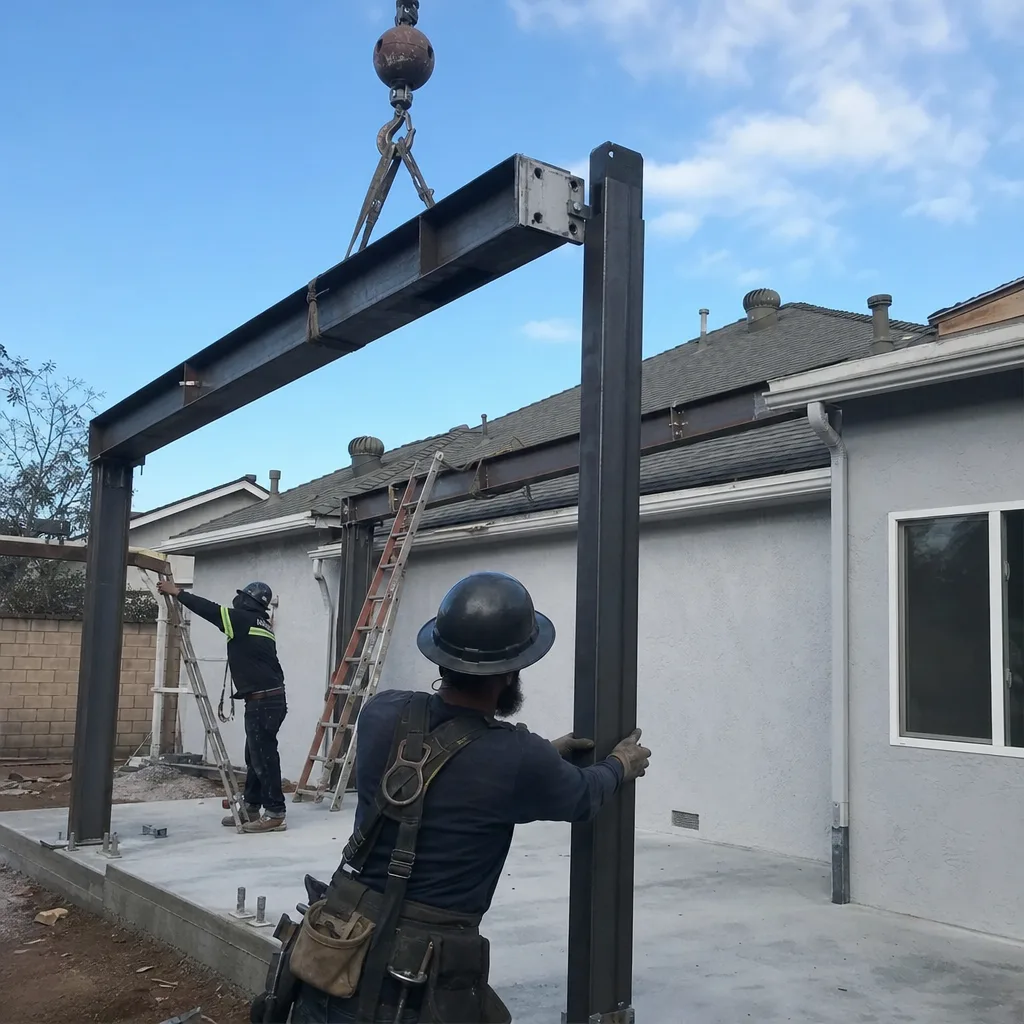
The most expensive ADU decision happens before anyone swings a hammer, and it’s choosing the wrong build method for your lot. In Tustin, we’ve seen flat-lot homeowners pay a premium for site-built when a prefab unit from a manufacturer like Boxabl would have delivered the same square footage in half the time. And we’ve seen the reverse: a prefab unit ordered for a tight Old Town lot with a narrow side access that made delivery functionally impossible without a crane that the budget never accounted for.
Each build method has failure modes that look like builder problems but are really selection problems. Here’s the diagnostic:
- Prefab ADUs (Boxabl, some Plant Prefab models): Fail when delivery access is constrained, foundation tolerances are off, or the utility stub locations don’t match the factory specs. These aren’t quality failures. They’re coordination failures that could have been caught with a proper site feasibility review.
- Modular ADUs: Fail when site grading can’t accommodate module placement, or when modular manufacturer lead times collide with city permit expiration windows. A six-month factory backlog plus a six-month permit process is a sequencing problem, not a construction problem.
- Site-built ADUs: Fail when the builder’s framing schedule slips due to weather, or when change orders stack up because the drawings weren’t detailed enough. On some Tustin lots, site-built is genuinely the right call, but it requires more construction documentation discipline from the owner.
- Tuff Shed conversions: Fail when the base shed wasn’t spec’d for habitation from the start, meaning insulation, electrical, and plumbing retrofits cost more than expected. When done with the right upgrades upfront, a Tuff Shed conversion is one of the most affordable ADU paths available. Done wrong, it’s a money pit.
The fix is simple but rarely done: a feasibility study before you commit to any method. A good feasibility study confirms setbacks, utility capacities, delivery access, and soil conditions before you write a deposit check to any manufacturer or builder. Skipping it is the single most expensive mistake we see in the ADU market.
Foundation Problems on Site-Built ADUs: Causes and Remediation
Foundation problems on ADUs in Tustin fall into predictable categories because the local soil conditions are well documented. Expansive clay soils in parts of Orange County create movement that shows up as slab cracks, door misalignment, and drywall stress within the first 12 to 24 months. The question is whether the foundation was engineered for those conditions or poured on a generic slab spec.
Here’s how we diagnose foundation issues on site-built ADUs, in order:
- Check the structural drawings. Was the foundation engineered based on a soil report, or was it a standard prescriptive slab? If there’s no soils report in the permit file, the foundation was built on assumptions.
- Document the crack pattern. Hairline cracks under 1/8 inch are usually cosmetic shrinkage. Anything wider, or cracks that grow over 60 to 90 days, warrant a structural engineer’s review.
- Look for the cause before the fix. Drainage issues, tree roots, and irrigation runoff cause more foundation movement in Tustin than actual soil failure. Fix the drainage first, then address the foundation.
- Know the remediation ladder. Minor settlement can sometimes be stabilized with deep injection or pier retrofits. Widespread heave or sinking on an ADU slab is rare, but when it happens, the fix is usually underpinment, which can run $20,000 to $50,000 depending on the structure size.
If the foundation was engineered and built to plan, and movement still occurred, this is a construction defect question. If the drawings never called for soil testing and the builder poured a generic slab, the liability picture shifts. Either way, stop work, document everything, and bring in a licensed structural engineer who is not affiliated with the builder.
Prefab Delivery Problems: A Completely Different Remediation Path
When a prefab ADU from a manufacturer like Plant Prefab or Boxabl shows up damaged, incomplete, or can’t be placed on the foundation, the remediation path is nothing like a site-built fix. You’re now dealing with a manufacturer warranty process, a delivery logistics company, and possibly a crane operator, in addition to your general contractor.
Here’s what to do, step by step:
- Document at delivery. Photograph every panel, module, and connection point before the unit is off the truck. Once the crane starts moving, damage attribution becomes impossible.
- Check the foundation tolerance before delivery day. Most prefab manufacturers specify a foundation flatness tolerance, often within 1/4 inch over 10 feet. If the foundation wasn’t checked against the manufacturer spec before delivery, placement problems are almost guaranteed.
- File the warranty claim immediately. Most manufacturers have a defined window for delivery damage claims, sometimes as short as 48 to 72 hours. Missing that window converts a manufacturer’s problem into your problem.
- Separate logistics damage from manufacturing defects. A cracked panel from transit is a freight claim. A misaligned module connection is a factory defect. Each goes through a different channel, and confusing them delays the fix.
The takeaway: if you’re going prefab, read the manufacturer’s delivery and warranty terms before you sign anything. Know the tolerance specs, the claim windows, and who is responsible for crane costs if the first delivery fails. A contractor who has delivered that manufacturer’s units before is worth the premium.
Documenting Construction Defects: Evidence That Holds Up
If an ADU problem escalates to a CSLB complaint or small claims action, the outcome turns on evidence collected before the dispute existed. Most homeowners collect the wrong evidence too late, and the case falls apart.
Here’s the documentation protocol we advise for any ADU project in Tustin, starting from day one:
- Keep a dated project journal. A simple notebook or spreadsheet with dates, weather conditions, who was on site, and what was done. In a dispute, contemporaneous records carry more weight than memory.
- Photograph everything weekly. Wide shots that show the whole project, close-ups of connections, foundations, and utility work. Time-stamp them. Cloud backup them. This is not optional.
- Save every communication in writing. Text messages count. Follow up every verbal conversation with a confirming email or text. If a builder promises a fix verbally and never does it, the written follow-up is your evidence.
- Get the permit inspection card. In California, the job card showing passed inspections is a public record tied to the permit. If failures were noted and then re-inspected, that record matters.
- Never pay for unapproved work. If a change order wasn’t signed in advance, don’t pay for it under pressure to “keep the project moving.” Paying signals acceptance and weakens your position later.
- Define the problem in one sentence. “The foundation slab is out of level by 3/4 inch over 8 feet” is actionable. “The foundation is messed up” is not. Specificity forces the builder to respond to facts, not vibes.
- Ask what the drawings specified. Many “defects” are actually the builder following plans you approved but didn’t fully understand. Review the drawings together before assigning blame.
- Request a written remediation plan with dates. What gets fixed, who fixes it, when will it be done, and who pays for it. Verbal promises don’t bind anyone.
- Agree on the inspection criteria. “Fixed” means different things to different people. Specify the measurable outcome: flat within 1/4 inch over 10 feet, no visible cracks after 30 days, drainage slope at 1/4 inch per foot.
- Put it all in a written addendum. If the remediation changes the original scope or cost, amend the contract with the same formality as the original signing.
If you do need to escalate to the CSLB, the complaint process requires specific documentation: the contractor’s license number, the contract, proof of payment, and a description of the work that was done versus what was promised. The state can mediate and, in some cases, order restitution through the contractor’s bond. Small claims in Orange County caps at $10,000 for individuals, which covers many ADU dispute amounts but not all.
The Three Mid-Project Moments Where Pausing Saves Money
Construction has a momentum problem. Once excavation starts, everyone feels pressure to keep going. But there are three moments where a deliberate pause, even for 48 hours, saves more money than pushing through.
Moment one: After the first change order. The first change order is a signal about the rest of the project. Is it a legitimate unforeseen condition, or is it a sign the original scope was thin? Pause, review the original contract language, and ask whether future change orders will follow the same pattern. This is the moment to reset expectations in writing before the change orders stack up.
Moment two: When utility work begins. Trenching for sewer, water, and electrical is where the ground truth meets the drawings. If the actual utility locations don’t match the plans, this is your cheapest window to adjust. Once the slab goes down, fixing a misplaced sewer lateral becomes a jackhammer operation. Pause, verify, and confirm before concrete is ordered.
Moment three: After rough-in inspection. Once framing, plumbing, and electrical rough-in passes inspection, you have a natural checkpoint. The structure is exposed. Walk it with your builder. Check the window placements, door swings, outlet positions, and ceiling heights. Changes at this stage cost hundreds, not tens of thousands. After drywall goes up, you’re paying for demolition.
In our experience on Tustin ADU projects, homeowners who use these three pause points end up with fewer change orders, lower final costs, and a finished unit that actually matches what they envisioned. The pause isn’t delay. It’s the cheapest quality control available.
Working With Your Builder to Fix Problems: A Practical Playbook
Most ADU builder problems don’t require firing anyone. They require a structured conversation and a written correction plan. But the conversation has to happen before positions harden. Here’s a playbook we’ve seen work repeatedly on Tustin projects:
The builders worth keeping respond to this process professionally. The ones who resist written remediation plans are showing you their dispute resolution style, which is information worth having before the project gets any further along.
Common Mistakes to Avoid
- Skipping the feasibility study. In Tustin, a $2,000 to $5,000 feasibility study can prevent a $50,000 mistake. It’s the cheapest insurance in the whole ADU process.
- Signing a contract without a change-order clause. No threshold, no written approval requirement, no project. The contract is your only protection against runaway costs.
- Choosing a build method because a sales rep recommended it. Prefab, modular, site-built, and Tuff Shed conversions each fit specific lot and budget profiles. The method should match your property, not someone’s commission structure.
- Waiting too long to document defects. After the drywall goes up, foundation problems become invisible and then become arguments. Document before closure.
- Paying the final draw before punch list completion. Once the builder has full payment, your leverage for fixing the last 2% of the project drops to near zero. Hold back until the punch list is done.
- Treating prefab delivery day as a formality. The inspection at delivery is your only evidence window for transit damage claims. Treat it like the most important meeting of the project.
- Assuming the city is the cause of every permit delay. Check the application completeness first. More often than not, the delay is a missing document, not a backlog.
When to Call a Professional
Some ADU problems are worth attempting to resolve yourself. Others need an experienced set of eyes the moment they appear. Call a professional if your foundation shows structural cracks wider than 1/8 inch that are growing, if your builder has stopped responding to written communications about documented defects, if you’ve received a stop-work notice from the city, or if your prefab unit arrived with damage that the manufacturer disputes. If you’re in Tustin and want a second opinion on an ADU problem, or if you’re still in the planning phase and want to avoid these problems entirely, Holloway ADU Builders offers free estimates. Call (855) 617-6356 to schedule a consultation.
Frequently Asked Questions
Foundation remediation on an ADU in Tustin typically ranges from $5,000 for minor crack injection and drainage correction to $50,000 for full underpinning on severe movement. The final number depends on the cause, the foundation type, and whether the movement is ongoing or stabilized. The first step is a structural engineer’s report, which itself runs $1,500 to $3,500. Call (855) 617-6356 if you want a builder’s assessment on whether you’re looking at a repair or a replacement scenario.
Yes, California law allows you to terminate a contractor, but the process is governed by the termination clause in your contract. You’ll owe payment for work completed, the builder may place a mechanic’s lien for unpaid work, and you’ll need to secure the permits for the replacement contractor. Before terminating, document your reasons in writing and consult the CSLB about whether a complaint is warranted. The cleaner your contract language, the cleaner the separation.
The most common ADU permit problem in Tustin is an incomplete application that stalls before plan check actually begins. Missing site plans, unresolved utility easements, or incomplete title documentation stop the clock on California’s 60-day review requirement. Ask your builder for the city’s completeness determination letter to confirm where your application actually stands.
The answer depends on your lot access, foundation conditions, timeline, and budget. Prefab units from manufacturers like Boxabl or Plant Prefab work best on lots with clear crane access and straightforward utility connections. Site-built works better on irregular lots, properties with tight access, or when you want full customization. A Tuff Shed conversion is a lower-cost path when your budget is the binding constraint. A feasibility study answers this question for your specific property.
A straightforward defect remediation, where the builder acknowledges the issue and fixes it, takes 2 to 6 weeks. A CSLB complaint takes 3 to 6 months for mediation. Small claims court in Orange County typically schedules within 60 to 90 days of filing. The variable is almost always the quality of the documentation you’ve collected, which is why the project journal and photo protocol matter from day one.
Document every communication with the manufacturer in writing, escalate to senior management, and file complaints with the California Department of Consumer Affairs and the Better Business Bureau. If the unit was purchased through a contractor, that contractor may have obligations under California contract law regarding merchantability. For Tustin homeowners navigating this, Holloway ADU Builders can help assess whether the issue is a manufacturer defect or an installation problem, which determines the correct claim path. Call (855) 617-6356 for a consultation.
The Bottom Line
ADU problems feel personal in the moment, but most of them trace back to decisions made before construction started. The build method didn’t match the lot. The contract didn’t define change-order rules. The feasibility study got skipped. The documentation wasn’t kept. Fix those upstream decisions and the downstream problems mostly disappear. For the problems that still surface, the playbook is consistent: diagnose the root cause, document everything in writing, and get a second opinion before escalating. Whether you’re working with a prefab unit from Boxabl, a Plant Prefab custom build, or a Tuff Shed conversion, the same discipline applies. If you’re planning an ADU in Tustin or need help rescuing one that’s off track, ADU Builders in Home Gardens know the local conditions that matter. Holloway ADU Builders works across the full Holloway ADU Builders home spectrum, from foundation to Kitchen Remodeling in Home Gardens and Bathroom Remodeling in Home Gardens, so you’re not coordinating multiple contractors when your ADU needs to be finished inside and out. Call (855) 617-6356 for a free estimate and a clear-eyed assessment of your project.
Written by the team at Holloway ADU Builders, serving Tustin since 2016. Explore more guides & resources for Tustin homeowners.